
Tries Hard, Cold Do Better
by Alex Keegan
or History of a Man "Born to be a Writer"When I was a beginning writer, I thought, I knew, that all the writers I admired came ready-built with their skills perfectly honed, their artistry God given. Over recent months this Journal has allowed me outlet for my pronouncements and so, I guess, at least for some readers, your position is something like mine was, not so long ago. This Keegan guy, some higher being, right? Must be a fantastic writer; all these books and stories, some great reviews, prizes, nominations for awards? My great literary ability must have been obvious from an early age -- it was quite inevitable that I reach the heights.
Well, yes, sort of, if you exclude the truth.
I teach creative writing, but one big problem I face is persuading beginners that if you have the heart and the soul and the determination, almost all of the rest can be learned. I ask do they really want to say something, do they feel things, do they really want to work to become writers or do they want to be a writer, ready made. Work? But what about the "magic", visits from the Gods, the muse? It's easy for you, they say, you're a writer, different, special already, the magic built in. It was easy for you.
Well, no, actually. And I thought I'd try to show that. I decided to reflect on the stuff that any other hope-to-be-famous-one-day person would have sensibly burned years ago. I give you the history of a man (cough) "born to be a writer"...
My first literary memory was from Primary School. I don't remember what the assignment was, but I wrote some sort of science fiction story. In it the hero went to the side of a very tall building and pressed a button... whereupon a giant mechanical arm came down and grabbed him by his pants and lifted him instantly to the 37th floor. My teacher wrote, "Errr, imaginative!"
But the reason I remember the essay was because of the word pants. I had never before had to write down the word PANCE and suddenly, in the midst of this brilliant story was a line of words all crossed out, every imaginable and unimaginable spelling of pants, P-A-N-S; P-A-N-C-E, P-A-DOUBLE-ENN-S, P-A-N-Z, most of them tried at least twice, and right on the end, inspiration, TROUSERS!
"Why didn't you write trousers in the first place?" teacher asked. Hah! Another stupid adult who knew nothing. Didn't she understand? These weren't trousers, they were short trousers, you know, Miss, pance.
At the age of twelve I came close to being made Poet Laureate. Class was required to write a poem about when it's frosty. So concerned was I to find rhymes that I hit on the brilliant idea of finishing EVERY line with, "When it's Frosty". History has lost this masterpiece, but not the memory of having my great work read out as an example of how NOT to write.
Everything goes white and the windows of 2-N
have all those squiggly patterns on,
When it's Frosty.
And the hill by the bike sheds has that slippery
black bit where Mr. Harris fell down,
When it's Frosty.
It was a while before the world heard my bardic voice again. I didn't take to formal education and skipped school a great deal, and then, when my parents split up, I was put in a children's home. As soon as I was fifteen, I joined the Royal Air Force and it was there that I discovered my true genius. This fabulous piece was dated 11th March 1967. I was 19½. I hadn't yet reached the supreme excellence of,
Why don't you choo-choo diesel train,
Why don't you puff and wheeze,
Oh, why can't you be like the steam trains were
Oh, won't you tell me, please?
I hadn't yet quite reached that pinnacle. My first poem was "Talk about Miserable." I know from my many literary contacts the Sir John Betjeman cried when he first heard it.
Talk about miserable; I'm feeling blue,
Sat all alone with nothing to do.
I sat in the Naafi; At eight o'clock,
And after five hours, I left for the block.
But the miseries got me; And I ended up here,
So I'll write all this down and get my mind clear.
I do miss Jeanette (and so do we all)
Even though she's so terribly small...
I've a broken heart (that's shattered pride)
And I've got a new feeling, that I'm trying to hide...
Day after day, it's getting stronger,
Lucky for me it won't last much longer!
I'll play a record; Oh, Christ it's sad,
Still maybe I like it, feeling this bad.
I hope in the morning, that I'm not so blue,
I'll get some sleep and start anew.
Chris Sumner is back, (still hasn't grown).
Now there's a girl I'm glad to have known.
I'm glad that's all done, and out of my head,
I feel a bit better, so I'm off to bed.
I did get a bit better. One poem, "High Drama on British Rail" I still think has a cutesy feel to it.
High drama on British Rail,
A fire breaks out on the line,
Cool, calm, and collected, up stood a porter,
Said, this job, it will have to be mine.
The bucket he carried was filled to the brim,
With water (fire-outing) to put,
In a tenth of a second, the raging inferno,
Was reduced to a mountain of soot.
The porter turned round and was gone in a minute,
While the crowd just stood and stared.
When they called him a hero, he said "Nothing in it.
I didn't have time to be scared."
A moment in time for a Cheltenham hero,
When he left, nobody waved,
But thirty-nine passengers (to York via Sheffield)
Thanked the Lord that they had been saved.
I didn't fit at home, I didn't fit at school and when I finally escaped to the Air Force it was to discover I didn't fit there either. I began to wonder what I was and what was the ache I always had in my gut.
I tried very hard to be kicked out of the Air Force and eventually I managed to be taken off aircraft and shoved out of the way in stores. I bought a typewriter and used to tap away with it on my lap. The story was about after a nuclear war, with Britain split into two warring factions, the Nazi-style Powell party and the Royalists led by Prince Charles!! I liked the opening.
Over the sands east of Goole rose the red sun.
(That was the best line...)
"Adam! Adam Sheriff, you old devil!" Mayor Jones reached out a welcoming hand to his nephew as he walked towards him. "How are you, you son of a gun?"
"Uncle Jimmy! You get uglier every day. Sleeping well?"
"Ah, you're a hard man, Sheriff," smiled the old man, "a hard man."
"So you tell me every time I come here," Adam retaliated, "I'm used to it now."
"Don't I have any part in the welcome home?" a female voice interrupted
Adam spun round; he knew that voice anywhere. "Darling!" he shouted as the Mayor's secretary flung her arms round his neck. "Darling Jenny, let me look at you!"
Yeah, I know. Eat yer hearts out.
Then the Air Force to let me go but not before, I'd spent 28 days in an RAF cell in Catterick. It was there that I discovered Evan Hunter and read Mother's and Daughters, a book which I still believe was the one that confirmed in me the vague desire I'd always had to write.
And then I was out! Suddenly I discovered that civilians had to work for a living, and it was six years before I tackled writing again. I managed a little poetry and a divorce, started Open University and re-married, but writing, unless an analysis of Jane Austen counts, was gone.
You've already heard my unquestionable brilliance circa 1967. By 1972 I was writing shorter, tighter, and not just about me. This is about the disaster at Aberfan, Wales.
There was a black hill I knew
Known as Aber Mountain;
A bubbling, brooding, black bomb of a tip;
A million sly, slobbering tons of wet dust.
Silent, shifting coal
Ripped from below
by men with tingling sinews of steel
and asbestos-empty lungs;
A black-faced tin-hatted army
that wasted ten hours a day
far from the sun
in the bowels of a Welsh hill.
And all for hard cash,
Money for the wife at home
Food
and a roof.
And shoes, satchels and socks.
So the kids can go to school. At the bottom of Aber tip.
At some point I re-married. Then I stayed home and looked after baby, and wrote my first Great British novel, Giggle Valve, semi-autobiographical.
"Look Danny," I said it again. "I'm in it mate. Right up to 'ere!"
I pointed at my throat. "Right in it."
Danny grabbed a handful of beer and said what he'd said again, "OK, den, we'll burn it. S'easy!"
I guess, looking back there are signs that I was learning to get quickly to the point. But then I caught a near fatal disease; known as BSE; Beginners Sudden Excess. I began to imagine that good writing meant fancy writing. This was Reading pop festival, same book:
"And Dan and me were part of it, a tiny part of it, some pure, unrepeatable, love act of music. The sounds were wafting sandy and gentle, then throbbing rocky and coming in waves, thrusting away the vacuum of the rest of life."
"And it was all so beautifully and completely releasing: a world of its own played religiously with its flesh... touching freely all the lips and eyes and nipple and foreskins of heaven."
I blame Jack Kerouac...
One publisher rejected that one. So did one agent. So I gave up. I didn't know then that real writing was re-writing and I didn't know that to submit was the opposite of give up. I gave up. That was 1976. My next submission was 1986.
My second marriage had ended and in one driven month I wrote 41,000 words of "Ronnie", still unable to shake of the autobiographical urge.
"The sparrows were at it in the roof again. Ronnie lay there listening. He could hear their funny scratchy sounds and the little ones seemed to be scrabbling round a bit. Dad reckoned they were about three weeks old now, the little ones, and they'd be flying off in about three weeks. It was still more or less dark so he pulled one of the coats up round his neck. The fur of the collar lay around his chin and he sniffed at it. It was all warm and doggy. He drifted and closed his eyes. A minute later he was asleep. On a cluttered mantle-piece downstairs a Westclox said ten to five and the morning was a quarter of an hour away."
My first big knock-back. I entered Ronnie in a contest for new writers and was telephoned to say I'd made the last six and would be going to the final in London. Then two weeks later my manuscript came back and I was no longer on the list, some rubbish about two late entries... I stopped writing.
By now, I had managed two marriages and two divorces, but at least I was building up plenty of life experience! Yeah, I'd still become a writer some day, but right now I was madly in love with a new and younger partner and had stumbled into a way of making lots of money. So, I became a yuppie. I hadn't worked out. I was unhappy.
Then, on the morning of December 12th 1988, I was in the Clapham (London) Rail Disaster. Somehow I wasn't killed, but I should have been. I had spent the last four years editing and writing for a little athletics magazine and this, plus running, had seemed to fulfil me. But now everything seemed so much rubbish. My world gradually fell apart. By June I had lost my business, my home, and destroyed a relationship. I reached a drunken bottom when my girlfriend finally moved out. I was close to suicide or alcoholism or both.
I remember the day I decided not to keep going downhill and how I pestered people to fix me up with blind-dates, take me out, come round, anything to stop me staying in alone and brooding. I was now suffering Post Traumatic Stress with a vengeance but with the help of my friends I at least started to get out and about again. Then someone suggested I write about the Clapham crash as an exercise and as a way of dealing with the memory. The result was "7:08 from Parkway".
There is no screech of brakes, no squeal of wheels, no cries of despair. There is just the bang. He feels somebody punch him and comes up fighting, bewildered, blood pumping from a split eye, rolling dramatically down his cheek and soaking into his grey shirt. The man who has hit him is asking him if he's all right and he mumbles something back at him, a handkerchief pressed to his face now, bright, and red, and brave.
The train is full of dust and smoke, polite enquiry and soft tears. He shouts down the carriage asking if anyone is badly injured and is embarrassed by the sound of his voice. Around him, individuals are searching for minor items, pens, newspapers, books, spectacles. The contractor and the woman opposite him are OK, separated by a briefcase. The man who struck him is rubbing the top of his head now matted brown with blood.
He leaves the carriage and pushes past one stunned man in a rain-coat. Through the open window he looks forward. The train is in a concrete-walled cutting but some of it appears to be high on the banking, tremendous and deadly, a cast aside toy. A short fat railway man strides along between the wall and the train shouting, "Stay on the train! Stay on the train!
He thinks for a minute, something pumping madly about him then jumps the awkward gap up and across onto the concrete wall, slipping and scrabbling as he makes it. It is a little after eight o'clock, bright, cold and brilliantly winter. As he moves up the bank plant seeds stick to his navy coat. Above, at an iron fence, white faces appear. Beyond, a traffic jam splutters, waiting to move.
And this was later that night; when I was aware of everything...
That night he jogged a couple of miles with Ruth. He could feel the muscles in his legs criss-crossing to move him and the darkness opening for him to pass through. He could sense the position of his fingertips in the night air. His nostrils flared red in the breeze. After, she cooked him creamed chicken and rice and watched him as he ate it slowly, a tall glass of Sancerre on his tray. When they made love later, she crushed his head into her and he cried for hours.
And now I knew I wanted to write but I was old enough and crusty enough to realise I still didn't really know how. So I began to write more and more, slowly pulling myself together, dating again, scratching a living, reading how-to-write books, banging out short stories and then, after a brief affair writing:
He is too tired to think any more but her bright-eyed face dances around him like sparks from a winter fire.
That morning, swinging the car one-handed towards Reading he knew he would be late and she would already be there, the butterfly dream come back to life. Would she see how awkward he felt, how his head raced with worry and wonder as he stumbled his way through the building? Would he wave, be casual, nod across the room or should he go to her straight away, shake her hand and hold it for just a split-second too long? It would be a disaster; he'd walk in like a frog, knock something over, croak or squeak out something pathetic and melt into his chair or worse, she'd be deep in conversation and not notice him arrive. Then he would flush, suddenly hot, and panic as sweat formed on his spine and ran down into the small of his back.
I never finished it!
That November I met Debbie and we moved in together. We wanted a kid and suddenly it was decision time. I was a writer now, I knew it, and I didn't care if I starved, but I had stepped within striking distance of responsibility. In the end we compromised and when little Alex was born I became a house-husband, writing about being a Dad, writing short stories and beginning a detective story which would one day be my first novel, Cuckoo.
Cold Monday morning, six o'clock. November. Brighton sea-front had to be grey, windswept and damp. It was, but as far as Caz Flood was concerned, it was the only place, the perfect place to be. Yesterday she had been a beat copper, a woodentop, today she was a DC, a detective constable, and nothing, but absolutely nothing, could stop her now.
But we were a long way from home free. Cuckoo stagnated and was stuck in a drawer. In March 1993, I attended a writers Conference and I heard two lectures by Caroline Oakley of Headline Books. In one, Caroline mentioned that publishers wanted Women-in-Jeopardy books, and in another she talked about approach letters.
The following week I sent Caroline a fax that took me more than a day to compose, lied about Cuckoo and managed to persuade her to take a peek. Caroline liked my hastily-dusted 28,000 words, persuaded me to finish the book and Cuckoo was gradually written and edited and a contract for three books offered on my birthday in October 1993. That was published in August 1994, followed by Vulture, Kingfisher, Razorbill and now A Wild Justice. I've also managed to publish forty-something short stories too.
Maybe I was blessed with a little bit of a gift for language, maybe it was my upbringing or the way I ate library books as child, but I started out as a hopeless case, wasted year after sterile year, gave up when perhaps I shouldn't have, took wrong turnings, didn't follow through or persist when I had encouragement.
There are a thousand questions people ask writers and a hundred times as many answers. But one big question is "What was it that finally made you do it? What was the turning point?" For me it took a blow on the head, a brush with death, the loss of my ability to run, and then the help of friends to learn to work hard at what I believed in, to persevere and be true to myself.
Now I'm a writer. I was a writer all along but I didn't let it happen. Yeah, I've got no money but I'm as rich as anyone reading this. And of course, I had the gift all along, didn't I? It was so obvious in my early work, right? It may have taken me forty-seven years to become an overnight success, but really, the magic was there all along, wasn't it? The hard work, the hammer, hammer, submit, submit, of the last seven years are minor in comparison to being born with a way with words. So that's me, born with a silver pen in my hand. What else could I have been but a writer?
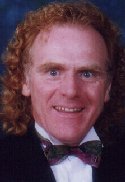 British Crime and Literary Fiction Author Alex Keegan is publisher and editor of the British literary magazine, Seventh Quark. He is
creator of the five Caz Flood novels: Cuckoo (Headline Books, St. Martin's Press), Vulture,
Kingfisher, Razorbill (Headline Books) and A Wild Justice (Piatkus Books)
which all feature feisty female private investigator Catherine "Caz" Flood. Cuckoo was published in the U.S. by St Martin's Press, and
was nominated for an Anthony Award as best first novel.
British Crime and Literary Fiction Author Alex Keegan is publisher and editor of the British literary magazine, Seventh Quark. He is
creator of the five Caz Flood novels: Cuckoo (Headline Books, St. Martin's Press), Vulture,
Kingfisher, Razorbill (Headline Books) and A Wild Justice (Piatkus Books)
which all feature feisty female private investigator Catherine "Caz" Flood. Cuckoo was published in the U.S. by St Martin's Press, and
was nominated for an Anthony Award as best first novel.
His prize-winning short stories have been featured in
numerous publications including Mystery and Manners, BBC Radio 4, Blue Moon Review, Southern Ocean Review,
and The Atlantic. He is a Contributing Editor for The Internet Writing Journal.
His blog can be found here.
Return to the February 1998 issue of The IWJ.