
Reviews of Writing Books
Pen & Sword: A Journalist's Guide to Covering the Military by Edward Offley
Marion Street Press, November, 2001Paperback, 311 pages
ISBN: 0966517644
Ordering information:
Amazon.com
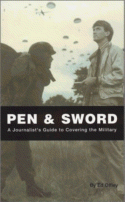 Pen & Sword offers useful tips for journalists
covering the military, conflicts and wars.
This is an extremely timely book, considering the
current war on terrorism and possible war with Iraq.
The book provides details of how journalists have
covered previous military engagements
and offers advice and suggestions for covering
future events. Tips are provided for dealing with
public affairs officers, meeting generals and commanders
and surviving the Pentagon.
The book also covers sensitive issues journalists face
in covering war, like reporting on a serviceman's death,
and covering an aircraft crash. Pen & Sword also
contains extensive reference information, including an overview of
the defense industry, lists and pictures of military rank,
lists of government military websites and a chronology
of U.S. military operations since 1981.
Pen & Sword offers useful tips for journalists
covering the military, conflicts and wars.
This is an extremely timely book, considering the
current war on terrorism and possible war with Iraq.
The book provides details of how journalists have
covered previous military engagements
and offers advice and suggestions for covering
future events. Tips are provided for dealing with
public affairs officers, meeting generals and commanders
and surviving the Pentagon.
The book also covers sensitive issues journalists face
in covering war, like reporting on a serviceman's death,
and covering an aircraft crash. Pen & Sword also
contains extensive reference information, including an overview of
the defense industry, lists and pictures of military rank,
lists of government military websites and a chronology
of U.S. military operations since 1981.
Ed Offley, an experienced Gulf War reporter at the Seattle Post-Intelligencer, teaches journalists how to handle the difficult issues presented by war coverage and shows them what types of information are readily available for further research. Pen & Sword is an excellent book for any journalist, but especially for journalists who are covering the military beat, including the current War on Terrorism.
The Writer's Guide to Selling Your Screenplay by Cynthia Whitcomb
The Writer Books, September, 2002Trade Paperback, 195 pages
ISBN: 0871161923
Ordering information:
Amazon.com
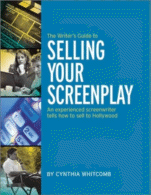 Selling a screenplay, like selling any product, requires
knowledge of the buyers, marketing skills and
sales strategies. In Selling Your Screenplay,
screenplay sales expert Cynthia Whitcomb offers
this insider information to writers, as well as tips and
suggestions on how to sell screenplays to specific
Hollywood markets. The book covers a number of
sales techniques for screenplays,
pitches, query letters, pitch-a-thons, follow-up calls and
story meetings. Whitcomb also
explains financial matters, such as what screenwriters
can expect as far payment and royalties are concerned.
Agents, the Writer's Guild of America and the film
production process are also covered in the book.
Useful sections in the back of
the book include web resource listings, contest listings
and answers to common questions from beginning
screenwriters like: "Do you have to have an agent first?"
and "What is a release form and should I sign one?"
Selling a screenplay, like selling any product, requires
knowledge of the buyers, marketing skills and
sales strategies. In Selling Your Screenplay,
screenplay sales expert Cynthia Whitcomb offers
this insider information to writers, as well as tips and
suggestions on how to sell screenplays to specific
Hollywood markets. The book covers a number of
sales techniques for screenplays,
pitches, query letters, pitch-a-thons, follow-up calls and
story meetings. Whitcomb also
explains financial matters, such as what screenwriters
can expect as far payment and royalties are concerned.
Agents, the Writer's Guild of America and the film
production process are also covered in the book.
Useful sections in the back of
the book include web resource listings, contest listings
and answers to common questions from beginning
screenwriters like: "Do you have to have an agent first?"
and "What is a release form and should I sign one?"
Cynthia Whitcomb has sold over seventy screenplays and television scripts, and has also taught screenwriting for nearly twenty years at the UCLA Film School. She is also the author of The Writer's Guide to Writing Your Screenplay. Once you've written a screenplay and you are happy with it, you must turn to the difficult process of getting it sold. Cynthia Whitcomb helps writers learn what agents and studios want to hear, and offers methods for approaching them and getting your screenplay noticed. Whitcomb's book is also fun to read; her stories about the business behind Hollywood and anecdotes from her own experiences are very entertaining. This is a must-have for any serious screenwriter.
Return to Book Reviews Index
Return to the February 2003 issue of The IWJ.
More from Writers Write