
Mothers Who Write: Diane McKinney-Whetsone
by Cheryl Dellasega, PhD
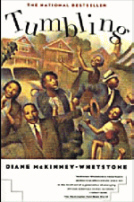
-- from the novel Tumbling by Diane McKinney-Whetstone
Diane McKinney-Whetstone attended the University of Pennsylvania in Philadelphia, PA, and graduated in 1975 with a Bachelor of Arts degree in English. For the first ten

|
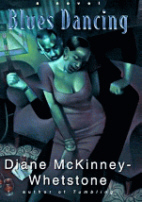
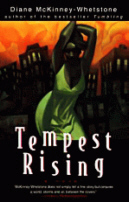
One reader commented that her writing: "…makes me marvel. It is smooth, sure-footed, wise as old folks, hip-hop street smart, a beam of laser light that illuminates the human condition." Another reviewer said: "…from the first pages the book, Tempest Rising locates us on an intricate map of relationships, trying to find in which direction lies home…" Another exclaimed: "If you haven't read this book [Tempest Rising], run out and buy it right now! Ms. McKinney-Whetstone, keep doing what you're doing!!!! Hey Oprah-how about making this a selection for your Book Club?"
Ms. McKinney-Whetstone has twins, a son and daughter who are now 18 and in their first year of college.
What inspired you to write?
|
Given that motivation, I took a short non-credit course at Penn where participants were required to turn in a critique and short story. This forced me to come up with a chapter that seemed like the possible first chapter of a novel. When it came time to get feedback, the group raved over my piece, and wanted to know where it was going from there.
Inspired by the encouragement of my classmates, I got involved with the Rittenhouse Writer's Group in Philadelphia. In that group, I worked on the novel, getting each chapter critiqued. At this point I was falling in love with the actual process of writing. I was so energized I would get up at 4:30 in the morning and write until 7 A.M., when everyone else woke up. That became such a precious time to me -- I felt more alive and more engaged than I ever had before, which sustained me to keep writing.
How old were your children when you started to write?
|
I meshed the roles of mother and writer by continuing to write early in the morning, a practice I still try to follow. When I get to the intensive stage, I just have to write all the time, which can be intrusive to my family. Sometimes when I'm in that phase, I have to leave the house and go to Pendle Hill, a nearby Quaker retreat and write there. If I don't get away and try to get through this phase at home it's too easy to put the writing aside and get caught up in the activities of my children. There are times when they will say "You were busy with your book" in a way that lets me know they needed me at that point. Sometimes they want my attention on them first, but that's natural.
Could you have written the books you have if you weren't a mother?
I'm sure motherhood has contributed to the expanse of my worldview, it's reflected in my books. I would be writing very different books if I weren't a mother. There is a certain emotional intensity that comes with motherhood, and that bond gets reflected in my work. My children were part of why I started writing -- I wanted to be able to give them everything I could.
From a practical standpoint, how has being a mother affected your writing?
|
Now that my children are leaving I have no more excuses for not being productive and meeting deadlines. Initially, it will be very difficult, trying to prepare for it since so much of my energy and focus has gone to them.
Are your books like children to you?
Oh yes, my books are like children because I can't take criticism about them. I read what people say about them, and if it's bad I just flip right on by.
Does it make your children uncomfortable to have a mother who is a writer?
My daughter was first person to read Tumbling, and her reaction was what led me to send it to an agent. I'd go into her room when she was going over it, pretending I was looking for something but really seeking her response. She was so enthusiastic it gave me the confidence to send the book to an agent.
One time I was scheduled to go to their school to talk about the book, but a reading at Borders was scheduled for the same time, so my children's classmates circulated a petition to get the meeting changed, and they packed the reading at Borders. So I think my children and their friends like my writing career.
Are your children in your stories or novels anywhere?
Neither of my children has ever seen themselves in my characters. They were so thrilled when the first book came out they would have probably liked to be written about. Even now they listen to early pages and give their opinion.
Has there been anything from your children's lives that you wanted to write about but didn't for privacy reasons?
Not from my children's lives, but when I get going, the events in the stories get scrambled up. I don't use specific things but draw on a sense of someone I know, and I do write about real things. For example, foster children lived around the corner from us when we were younger, and I remembers seeing their eyes, an impression I carried with me and drew on when I wrote. So although I've never been a foster parent, that powerful memory stayed with me and helped me to write about it years later in my fiction.
My stories come from so many places. I didn't know much about heroin addiction, but I did know people who had been addicted. Watching them affected me in a way that led to writing about a character with that problem.
How did your own mother influence you as a writer -- if at all?
My father was a state senator for two terms, so his world was politics. Writing fiction seemed like frivolity to him. Then I got a grant from the PA Council on the Arts to finish Tumbling, and he just couldn't believe that I would leave my job to write. He gave me a lot of input on what Philadelphia was like in the '30s and '40s, the setting for the book, but he never got to read it because he died before it was published.
My mother always told me I was a good writer, but she looked on writing as a means to an end, never a fulltime job. I have 5 sisters and one brother, and we're very close. Several of my sisters are also good writers: one has a public relations firm, and one works for the government in Washington. They are my readers and give me feedback. I think one of my sisters will try to write now that she has a small son and is at home more.
Any other thoughts on how being a mother has influenced you as a writer?
My husband and sisters are a real support to me. When I went on the road tour, even my children's classmates would help out! It was like their parents went through this whole process with me, volunteering to drive my kids places or whatever was needed. Emotionally, though, there is the part of me that never leaves, even when I'm on the road. I call home every morning to check on how things were going, partly out of habit.
What are you working on now?
I'm working on my fourth novel, which is also set in Philadelphia. I'll be turning it in shortly, and am at that point of reviewing it with a critical eye. It's like when you're having people over, and the house you live in every day suddenly needs completely revamped. You see things you don't see every day, and that's what's happening right now. I'm seeing things about this book that I had been comfortable with before, and trying to clean it up as much as I can.
You can read more about Diane at her website: http://www.mckinney-whetstone.com.
**Cheryl Dellasega, Ph.D., is a mother, wife, writer, and Associate Professor of Medicine at Penn State University in Hershey, PA. Her book, Surviving Ophelia, will be published in Fall 2001 by Perseus Publishing. She can be reached by email at cdellasega@aol.com.
Return to the October 2000 issue of The IWJ.
More from Writers Write