
Faith and Doubt: an Interview With Susan Ketchin
by Jan McDaniel
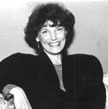
Susan Ketchin is a writer, teacher, musician, and editor.
|
Ketchin has taught creative writing, American literature, and religion in Southern fiction at Duke University, at North Carolina State University, and elsewhere over a teaching career of twenty-five years. In the spring of 1999, she was a Visiting Professor at Duke Divinity School where she is teaching a seminar in Religion in Literature of the American South.
In the spring of 1996, Ketchin served as Co-chair of the Eudora Welty Chair of Southern Studies at Millsaps College, Jackson, MS. She has been Associate Editor at Algonquin Books of Chapel Hill and fiction editor at St. Andrews Review, Southern Exposure and DoubleTake Magazines. Most recently, she served as fiction editor at the University Press of Mississippi.
Her work includes many reviews, articles, and essays in literary and trade journals. Ketchin also performs and writes music with the Tarwater Band (since 1975) named after Flannery O'Connor's "backwoods prophet") and The Angelettes (since 1993), a bi-racial, all-women jazz, blues, and gospel group.
Like many Southern authors, Ketchin contemplates the past. Her fascination with how oral history is affected by stories and songs has evolved into two volumes of author interviews. The format of her books give a unique insight into contemporary writers' personal beliefs and into what they and Ketchin, herself, see as the beliefs of those around them.
|
Exploring fiction is part of the writing -- and living -- process. In her introduction to the book, Ketchin says, "Many southerners have heard countless stories about the people they know and those they are connected to, past and present; these stories form the invisible sinews that hold family, community and land together over generations."
Drawing on earlier Southern writers, Ketchin compares the similarities contemporary writers share with those who have come before them and the differences changing decades have brought to a region historically fraught with such upheaval. She notes, as others have before, that all writers and not just those from the South must face the challenge of telling the old, old story of human yearning and desire in a modern world whose structure is in a state of flux.
Her two most recent themes, religion and music, often go hand-in-hand in the South or anywhere else. The kinds of questions she asks are those that will always be asked, and they hint at the heart of who we are and why we feel compelled to connect with others. These questions boil down to a central essence when she asks, "Does the writing -- or the reading -- have the power within itself to be redemptive?" In the interview below, Ketchin discusses this issue and others relating to writing and her work.
What was it that made you become interested in writing?
Flannery O'Connor, through her work, inspired me. She had known my mother. The two of them went to school together and even worked on the school newspaper, so I heard stories about her life from the time I was very young. Another writer who encouraged me a great deal was Eudora Welty. I met her about fifteen years age, and she has been a continuing source of inspiration and help.
Do you think technology has influenced the area of literary criticism and, if so, how?
I've enjoyed reading the reviews of my book on the Amazon.com website, so I believe e-mail and access to information are great benefits of technology. This kind of review pleases me because these reviews are written by readers, and that makes me feel more connected to them.
In your opinion, what makes Southern women writers unique?
|
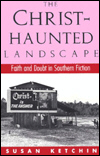
In your book, The Christ-Haunted Landscape--Faith and Doubt in Southern Fiction, you interview both male and female authors. How did you select these twelve individuals, and was the number "twelve" significant (as in the twelve disciples)?
The coincidence was not intended, but it worked out rather well. I chose these authors based, first, on their writing. They all had been consistently concerned with issues of theology in their work.
When you approached these authors, what did you hope to reveal through the interview format that your own research could not provide?
Had I analyzed the material myself, I wouldn't have known whether I was right or not. I wanted to find out what they thought about religion in their own work. The interview is really an oral history which makes the material lively and immediate.
This project explored the role of religion in literature. Do you agree with Lee Smith's assessment of writing as a kind of salvation experience?
She does think of writing in this way, and many of the other authors did. Their work represents and reflects serious struggles with faith and doubt.
You say of Harry Crews, another author you interviewed for this book, that he "creates fiction as art in one powerfully compelling metaphor--the writer as shaman." Do all writers use storytelling for the same kinds of curative purposes?
Some authors do. The redemptive and healing purposes are not just for the writer. They are for the reader as well.
Considering the Deep South is still known as the "Bible Belt," have you received any criticism or negative press as a result of writing this book?
| "Southern women are caught in a potent kind of culture . . . or a potent dilemma in an extreme culture . . . more so than writers in other parts of the country. I think it makes you strong and tough, and I'm proud to be a southerner." |
Do you think Southern writers will continue to juxtapose religious and everyday life experiences in their work? If so, is the primary reason to provide a "catharsis" for them and their readers?
Guilt continues. It's a part of everyday life, and so the use of these subjects may even grow stronger. With religion or music, the old traditional demons will continue to rise and will continue to be themes in literature.
What are your future plans? Will you be working with authors again?
Yes, I use the same approach, and the interview again, as I speak with Ms. Welty, Charles Fraiser, Lewis Norton, Lee Smith once more, and Mary Hood. I will interview Rita Dove. Robert Morganfield, who is the half-brother of Muddy Waters, is another musician who will be included. This new book will be published by the University of Mississippi, as the last one was.
What advice would you give young writers today?
|
Susan Ketchin delves into what can be discovered about human nature when it is unveiled. Here are some of my favorite quotes from a few of the authors she interviewed in her book:
Larry Brown--" . . . my fiction is about people surviving, about people proceeding out from calamity."
Reynolds Price--"I'm attempting to write about those portions of creation which present themselves to me as important and worthy of communication to my fellow creatures."
Lee Smith--"The link for me between my own religious feelings and creativity is that with writing, you go out of yourself--but you know you can come back."
Sheila Bosworth--"When I was little we used to read and read, and my sisters and I would say, Oh, is that a good food book? Does it make you hungry?"
Shelia Bosworth and the others are right. Good fiction is like good food. It makes us hungry for emotional connections and leaves us wanting more.
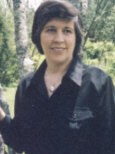 Jan McDaniel is a literary agent and writer
from the southeastern United States, currently living in Georgia. Her published work spans a
twenty-five year period and
includes columns and articles for newspapers and magazines,
curriculum materials, resource kits, radio spots, book reviews,
author interviews, and fiction in traditional and electronic
publications. Her short stories have
appeared in the Savannah Literary Journal, EWG
Presents, Moondance: A Celebration of Creative Women, The
Literary Journal, Alternate Realities, and FrightNet
Online Magazine. She is the owner of
Jan McDaniel Literary Agency, and is the founder and director of
Weekly Writer, a promotion-oriented
writing group. She may be reached via email at
Chance800@aol.com
Jan McDaniel is a literary agent and writer
from the southeastern United States, currently living in Georgia. Her published work spans a
twenty-five year period and
includes columns and articles for newspapers and magazines,
curriculum materials, resource kits, radio spots, book reviews,
author interviews, and fiction in traditional and electronic
publications. Her short stories have
appeared in the Savannah Literary Journal, EWG
Presents, Moondance: A Celebration of Creative Women, The
Literary Journal, Alternate Realities, and FrightNet
Online Magazine. She is the owner of
Jan McDaniel Literary Agency, and is the founder and director of
Weekly Writer, a promotion-oriented
writing group. She may be reached via email at
Chance800@aol.com
Return to the October 2000 issue of The IWJ.