
Build-A-Song Part II: From the Idea to the Hook
by Mary Dawson
This is the second in a series of articles called Build-A-Song, which presents a step-by-step method for creating a song. By no means is this "the only" method for writing songs. In fact, the approaches to songwriting are as many as the writers themselves. But our Build-A-Song series will offer a sequential template for covering the basics of successful songwriting. I hope you will follow along and perhaps even try this method as you create your own.Part 2 -- From the Idea to the Hook
O.K. -- Let's play a little Handyman's Jeopardy -- I'll be Alex Trebek. The category is Tools. Here's the answer: An implement that catches something…. holds something……sustains it and …. pulls it along.
And, of course, the question is……What is a Hook?
Now, unlike Alex Trebek, I can't offer you any high dollar prizes, but I can tell you that if you were sharp enough to get that one, you already have the definition for one of the most essential components in the songwriter's toolkit as well. In my first article in the Build-A-Song Series, we examined the importance of having a worthy idea as the solid substructure for any song. But inextricably interwoven with the idea -- like the RNA and the DNA of a cell -- there must also be a great hook. While the idea gives the song substance and something to say, the hook gives it focus and communicates the idea to the listener. The idea and the hook are basically "two sides of the same coin" and must work together to create a song that listeners understand and remember.
What exactly is a hook? And why is it so important? Like the tool described in our Handyman's Jeopardy question above, the hook of a song is that one line of music and lyric that is designed to catch the listener's interest, to hold and sustain that interest as the song continues, and to pull the listener into that "worthy idea" that gave rise to the song in the first place.
While the term, hook, is a relatively contemporary term, the concept behind it has been around for centuries. George Frederic Handel, for example, may have used the word motif or theme or some other composer's terminology, but the Hallelujah Chorus alone demonstrates that George definitely knew how to write a hook. Centuries after it was written, people old and young -- from every country and background -- students of Baroque Music as well as Pop and Country music fans -- still can whistle or hum the "Hal-le-lu-jah!" THAT is an effective hook!
The hook is the song's thesis statement. Just as every essay has a thesis that encapsulates its central idea in one statement, an effective song must have a hook that expresses in just a few words and notes what the song is about. The hook is ALWAYS repeated (if it is not repeated, you just "thought" it was the hook). It is usually also the title of the song and is that one line the listener will keep whistling or humming long after the song is over.
A very visual description of a hook was given to me by one of my early mentors in songwriting. He described the hook as a diamond, and the rest of the song as the black velvet backdrop jewelers use to display gems. He explained that if you have a beautiful 10-carat diamond on a background of broken glass, it will not show up at all. If, on the other hand, you display it on a draped background of black velvet, the diamond will stand out and shine in all its splendor. Just as each velvet backdrop only displays one stone, so each song must have one main hook. The entire rest of the song must be designed to display that one, shining "ten-carat" hook in its best possible light.
Song ideas and song hooks are so interwoven that they often appear at almost the same time in the writer's mind. Sometimes the idea comes first and then the writer finds that perfect phrase that will summarize it. But sometimes the hook comes first and gives rise to a great idea behind it. Great hooks are all around us -- floating in the air. As we begin to train ourselves to think like songwriters, we will develop antennae that will pick up the transmissions of these hooks as they sail past us every day.
Personally, I pay special attention to billboards, T-shirts with slogans, headlines, TV and news stories. I look for any colloquialisms or turns of phrase that might become a great idea. And this brings up still one more attribute of a great hook; just like with the toolshed instrument, a lyrical hook is extremely effective when it has a slight twist. Country songwriters are extremely creative when it comes to writing these little "word-play" hooks that have a double entendre or double meaning. How could anyone not be curious about a song with a title like Pouring Whiskey on the Wound, or how about... I'm Cryin' on the Shoulder of the Road.
For example, a couple of years ago I drove from Dallas to Nashville for one of my many business trips there. I was alone and it is sometimes hard to stay awake for the twelve hours of travel time between the two cities. I knew that if my mind were active and engaged, I would stay more alert and the time would pass more quickly, so I decided to write a song. Not having any particular idea to write about, I began to look at the billboards along the road and noticed that almost every other sign -- advertising a plethora of foods and services -- contained the words "Exit Now." My songwriter's brain began to ruminate on that phrase and I soon realized that this could be a "sign" for someone to "exit" from a relationship. Before I had reached my Memphis, I had written a Country song called Exit Now. The lyric for the song follows below. As you read it, try to evaluate whether or not I met the criteria for writing a hook and whether I displayed it well on the black velvet backdrop of the verses and the bridge.
Exit Now
I was driving down the interstateLyrics: Mary Dawson
Praying for a sign
Should I leave you? Should I stay?
My heart fought with my mind
So I asked for some direction
In what I oughtta do
At least a good suggestion
Some supernatural clue
And then I saw a billboard
On the roadside just ahead
It was the sign
I knew was mine
And this is what it said…..
It hit me like a ton of bricks
- CHORUS:
- Exit now -- while your eyes are open
Exit now -- before he lies again
Exit now -- before your heart gets broken
So bad it will never mend
Exit now
I rubbed my teary eyes
I thought my mind was playing tricks
Until I realized
That each offramp on the highway
For miles and miles and miles
Had signs that pointed my way
And I began to smile
Cause my prayers had all been answered
In a way I won't forget
Now my bags are packed
And I won't be back
Cause, Baby, you can bet..... I'm gonna.....
- CHORUS:
- Exit now -- while my eyes are open
Exit now -- before you lie again
Exit now -- before my heart gets broken
So bad it will never mend
I'm gonna exit now
- BRIDGE:
- There are signs of life and signs of the times
And signs of changing weather
But I remember most of all
The signs that said I'd better... ... ...
Music: Cheryl Bocanegra
Copyright © 1997 / CQK Music
ASCAP / Admin. Music Services, Nashville
Whether you are just getting started as a songwriter, or whether you have been writing for years, train yourself to become aware of hook ideas -- and then discipline yourself to write them down or tape them. Cooks have "cookbooks" -- songwriters should have "hookbooks" -- notebooks for writing down those great lyrical or melodic fragments that all too soon escape us if we don't record them. As you "train your brain" you will find that you are bumping into great ideas and great hooks all over the place -- in conversations, at the movies, even in the middle of the night (keep a hookbook or tape recorder on your bedside table). As your notebook fills up with ideas, your songwriting will take on new creativity and excitement.
To summarize, the hook of the song is very much like the punch line of a joke. It is that one line that we want the listener to "get" -- the line that "makes the light go on" in his or her eyes. The rest of the song is the "setup" for the punch line and must always move to that one great payoff musical and lyrical line. We'll have more to say about hooks and titles next time, but for now, start listening for great hooks on the radio and start training yourself to find your own.
Remember: a great idea can often get lost in the shuffle unless you find a killer hook to hang it on!
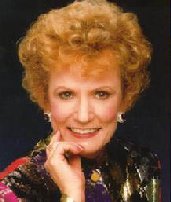 **From her earliest childhood years writing simple songs and poems with her father, through her twelve years as an overseas missionary, to her present, multi-faceted career as an author, lyricist/songwriter and conference speaker, Mary has always been adept at using words to communicate her heart to others. She is the President of CQK Records & Music of Dallas, Texas, a company which creates and produces songs in a panorama of musical styles for a variety of audiences, She is also the host of "I Write the Songs," a nationally syndicated radio talk show, especially created to inspire and instruct the more than 25 million aspiring songwriters in the U.S. "I Write the Songs" is broadcast over the Internet. Mary is a frequent public speaker and seminar lecturer on songwriting. She is a regular columnist for Independent Songwriter Web Magazine. Mary's commitment to discovering and mentoring talented new songwriters has given her extensive experience in song analysis through adjudicating songwriting competitions and conducting songwriting workshops across the country and around the world. Because of her role as president of an independent music company, she is also well qualified to instruct aspiring songwriters on the various
business aspects of the music industry. She is married and a mother of four. She resides in the Dallas area.
**From her earliest childhood years writing simple songs and poems with her father, through her twelve years as an overseas missionary, to her present, multi-faceted career as an author, lyricist/songwriter and conference speaker, Mary has always been adept at using words to communicate her heart to others. She is the President of CQK Records & Music of Dallas, Texas, a company which creates and produces songs in a panorama of musical styles for a variety of audiences, She is also the host of "I Write the Songs," a nationally syndicated radio talk show, especially created to inspire and instruct the more than 25 million aspiring songwriters in the U.S. "I Write the Songs" is broadcast over the Internet. Mary is a frequent public speaker and seminar lecturer on songwriting. She is a regular columnist for Independent Songwriter Web Magazine. Mary's commitment to discovering and mentoring talented new songwriters has given her extensive experience in song analysis through adjudicating songwriting competitions and conducting songwriting workshops across the country and around the world. Because of her role as president of an independent music company, she is also well qualified to instruct aspiring songwriters on the various
business aspects of the music industry. She is married and a mother of four. She resides in the Dallas area.
Return to the January 2000 issue of The IWJ.