
Finding a Movie Idea That Will Sell
by Skip Press
|
The first time I made money on a story I hoped would be a movie, I had no idea what would sell to Hollywood. I only knew that I had pleased the two producers who optioned my story (meaning they paid something down -- usually 10% -- and the rest when the money was in the bank to shoot the film). Thankfully, I learned through experience what types of stories I could write well and which ones I could not. And since I learned the power of networking early on, I never hesitated in passing a good story unsuitable for me to someone I thought might do it justice.
One day I came across the story of a psychiatrist in Australia who drugged patients then raped them. I passed it on to Michael Rymer, a then unproduced Australian screenwriter living in Los Angeles. He didn't know about the true story, and it intrigued him. When I introduced him to the people who had published the article, they gave him more material, and Michael wrote a screenplay and sold it to Village Roadshow. Michael was thrilled to sell the script; he even gave me a finder's fee. His movie Dead Sleep was a thriller starring Karen Black and Linda Blair. Now a writer/director, his latest project is the movie version of Anne Rice's novel Queen of the Damned.
The idea for Dead Sleep came from a newspaper that I had read but Michael Rymer had not. I often advise aspiring screenwriters to start looking wherever they live for screenplay ideas. Here's a good example of why. Writer/producer Mary Sweeney was reading the New York Times one day in 1994 when she came across the story of Alvin Straight, a 73 year-old man from Laurens, Iowa. When he found out his estranged brother in Mt. Zion, Wisconsin was ill, Straight, who no longer qualified for a drivers license, rode his lawn mower to see his brother and mend their relationship. Sweeney found the story "very American." She clipped out the article and faxed it to her friend John Roach, who also found it interesting. But when Sweeney looked into optioning the story, highly successful producer Ray Stark had already grabbed it.
Nevertheless, Sweeney didn't forget the story. She checked the Hollywood trade papers, and noticed it wasn't going into production. When Alvin Straight died in 1996, she made a deal with his children for the story, then verified that the option had indeed been allowed to lapse. That done, she and Roach retraced Straight's route by car and met some of the people he had met on his journey. They wrote a screenplay, rewrote it, then Sweeney gave it to director David Lynch, her partner in the Los Angeles production company, The Picture Factory. Lynch loved it, and suggested they recruit acclaimed actor Richard Farnsworth to play Alvin Straight. Farnsworth liked the script so much he came out of retirement to do the part. Filming of The Straight Story began in Iowa in September of 1998 and finished that October. And in 1999, Richard Farnsworth received a Best Actor Oscar nomination. All because a smart writer/producer saw an interesting story in a newspaper and followed up.
Does that make you wonder what Iowan writers who knew of the story as it was happening were doing? That's the trouble with writers. They too often neglect the harvesting of their own backyard. Ambitious screenwriters eager to make it to Hollywood write science-fiction epics and things they know nothing about, when a local story could be the ticket to a heart-warming, impressive screenplay.
Read your local newspaper. Is something unusual happening? Can you get the film rights? It might be easier than you think. Ask around about famous local stories. Remember, The Blair Witch Project was inspired by a local legend of Burkittsville, Maryland.
If you want to script a true story, here are some basic tips, even though I'm not a lawyer and I don't play one on TV:
- You cannot write a screenplay based on a true story of a living person or persons unless you secure the rights to do so from one of the involved parties. Make sure you have legal representation to help you with finalizing any agreement(s).
- You can write a screenplay based on documents in the public record, such as a trial transcript.
- You can write a screenplay based on a true story if all of the parties involved are no longer living, unless they have descendants whose interests might be infringed.
You might also consider recycling an old movie whose rights are now in the public domain (meaning the copyright has elapsed). As the story goes, George Lucas, who loved the old serial movies, wanted to do a remake of Flash Gordon. Unfortunately for Lucas but fortunately for moviegoers, producer Dino De Laurentis had already secured the rights to Flash Gordon. So Lucas wrote Star Wars (1977). This type of thing happens all the time in Hollywood. People who grew up loving a film or TV show think of new, updated twists. For example, Invaders from Mars (1986) was a remake of Invaders from Mars (1953).
Of course, filmmakers have to secure the rights to the property first. Producer David Permut was flipping back and forth between cable TV channels one night and saw Dan Ackroyd in an old movie, then Jack Webb in an old Dragnet TV show. Ackroyd. Webb. Ackroyd. Webb. The next day he called Ackroyd's manager and pitched his idea for a new, comic Dragnet. The manager signed on, and Permut made his quickest deal of his life with the president of Universal.
Superstar actor Tom Cruise reportedly paid $1.7 million to director Guy Ritchie for the remake rights to Ritchie's UK hit Lock, Stock and Two Smoking Barrels. Cruise has that kind of money partially because of his profits from the first Mission: Impossible (1988), which was a remake of an old TV show.
Chances are, you're not a movie star or a producer with access to stars and studio heads. That doesn't mean you can't find an old movie that has lapsed into the public domain that you can rewrite. It just requires a lot of research. The recent film The Bachelor was recycled from the 1925 Buster Keaton film Seven Chances. Have you researched any silent films lately?
Look at it this way, screenwriter. Once you input the script into your computer, it won't take you long to make the changes to update it. Just do your research and try to ascertain whether or not someone in Hollywood is already doing the same remake. How? Well, in recent years top Hollywood Websites have begun listing films "in development."
If you think veteran screenwriters don't do the kinds of things mentioned above, you haven't met any. The ones I know can rattle off any number of films whose plot resembles Alan Ladd's greatest role, Shane (1953). In my opinion, Kevin Costner's Waterworld was Shane, and so was Clint Eastwood's Pale Rider. Even if you can't get the rights to an old film, you could still parallel the plot in a new setting. Just don't steal the dialogue! Bill Martell, highly-successful screenwriter and author of The Secrets Of Action Screenwriting, freely admits to borrowing a "template" from old successful movies to create new scripts.
I'm always a little amazed when people complain about not having good ideas for screenplays. I have just the opposite problem. But then, I read a lot of newspapers, watch a ton of movies, and find life endlessly fascinating. It's all one big movie to me.
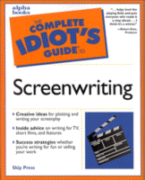
Excerpted from The Complete Idiot's Guide to Screenwriting, by Skip Press. Reprinted by permission. © 2001 Skip Press.
**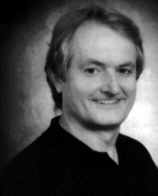 An award-winning author, screenwriter, teacher, playwright, and former Editor of Entertainment Monthly (Los Angeles), Skip Press has written -- and sold -- everything from radio and television scripts to feature films, plays, CD-ROMs, and a variety of articles and bestselling books, both fiction and non-fiction. His first script sale was in 1978, to a nationally syndicated radio series (Alien Worlds); later, he branched out into children's television (Zoobilee Zoo series, 1984; Algo's Factory series, currently on UPN), and CD-ROMs (Aladdin, 1995). He has also sold two feature film scripts (one written with Peter Flynn, another with Michael Sean Conley), and two plays which have been produced
(All The Difference and Curtain/Time). Another of his plays, Fourth World was a finalist in several national playwriting competitions, and Walking After Midnight has been optioned for a feature film. Skip has written almost two dozen books, including Writers Guide to Hollywood Producers, Directors and Screenwriting Agents, 1999-2000 (Prima Publishing) and How To Write What You Want & Sell What You Write (Career Press), which is now available in electronic format. How To Write What You Want & Sell What You Write was a finalist for Best Nonfiction Ebook for 2000 in the first annual Eppie Awards.
An award-winning author, screenwriter, teacher, playwright, and former Editor of Entertainment Monthly (Los Angeles), Skip Press has written -- and sold -- everything from radio and television scripts to feature films, plays, CD-ROMs, and a variety of articles and bestselling books, both fiction and non-fiction. His first script sale was in 1978, to a nationally syndicated radio series (Alien Worlds); later, he branched out into children's television (Zoobilee Zoo series, 1984; Algo's Factory series, currently on UPN), and CD-ROMs (Aladdin, 1995). He has also sold two feature film scripts (one written with Peter Flynn, another with Michael Sean Conley), and two plays which have been produced
(All The Difference and Curtain/Time). Another of his plays, Fourth World was a finalist in several national playwriting competitions, and Walking After Midnight has been optioned for a feature film. Skip has written almost two dozen books, including Writers Guide to Hollywood Producers, Directors and Screenwriting Agents, 1999-2000 (Prima Publishing) and How To Write What You Want & Sell What You Write (Career Press), which is now available in electronic format. How To Write What You Want & Sell What You Write was a finalist for Best Nonfiction Ebook for 2000 in the first annual Eppie Awards.
His latest book is The Complete Idiot's Guide to Screenwriting (MacMillan). He has also written for national publications as diverse as Writer's Digest, Disney Adventures, Espionage, and Reader's Digest, and sold electronic articles to America Online and other online magazines around the globe. A native Texan, Skip lives in Los Angeles with his wife and children. When he's not writing, you might find Skip on the golf course, teaching his popular online writing class, or spending time with his family.
Return to the March 2001 issue of The IWJ.